What will I see in the report?
Our reports bring together teacher comments, information about achievement and attendance. The layout varies slightly across year levels and subjects.
- A homeroom teacher comment: an overview of your child’s approach to learning, relationships, participation and school values.
- Learning-area comments: what your child has been learning, what they can do and areas to strengthen.
- Achievement information: progress descriptors or assessment-task grades, depending on the year level and subject.
- Śāstra learning: learning from sacred texts, including understanding, reflection and application of Krishna-conscious teachings.
- Attendance: information about your child’s attendance during the reporting period.
- Some secondary reports also include a student reflection, giving your child a voice in describing their learning and achievements.
What do the progress descriptors mean?
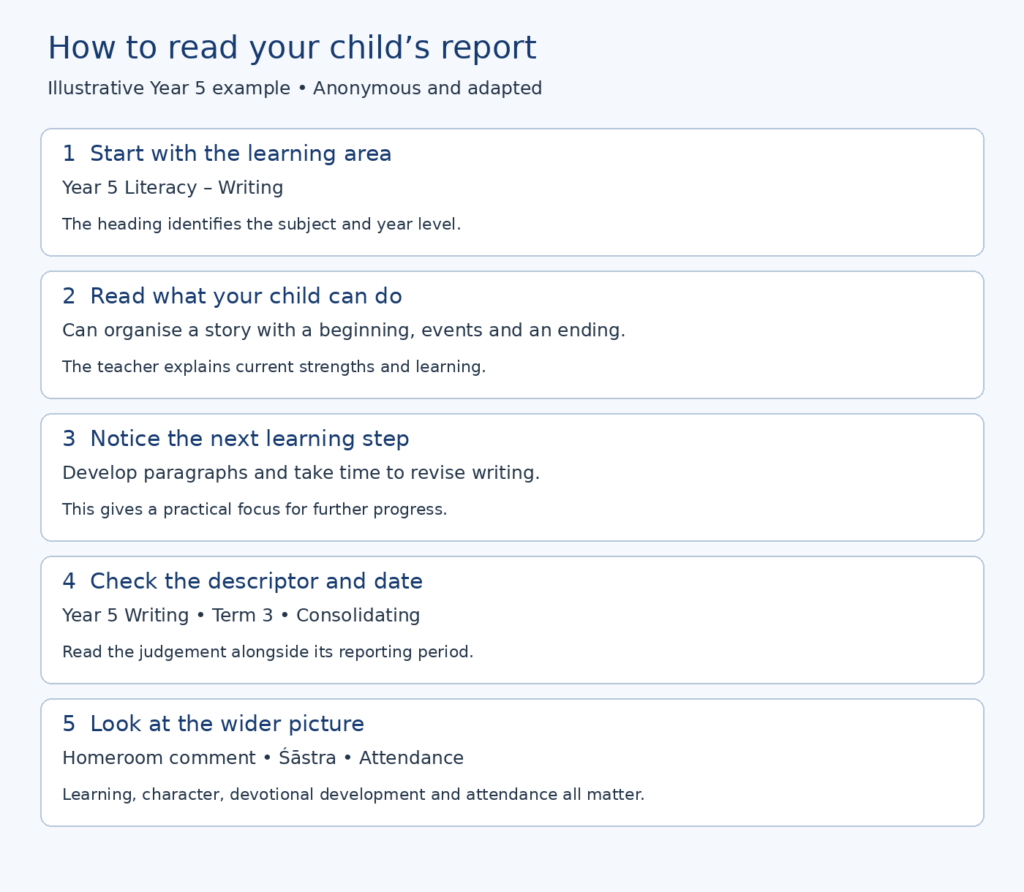
For reading, writing and maths in Years 1–10, the national reporting approach uses five descriptors. These describe learning in relation to expectations for your child’s year level.
| Descriptor | What it means for your child |
|---|---|
| Emerging | Beginning to build the expected knowledge and skills, with substantial support. |
| Developing | Making progress towards year-level expectations, with support still needed. |
| Consolidating | Meeting many expectations and strengthening understanding and independence. |
| Proficient | Meeting year-level expectations and using learning independently. |
| Exceeding | Demonstrating learning beyond year-level expectations, with depth and flexibility. |
At the end of the year, Proficient or Exceeding indicates readiness for the next year’s learning. A mid-year judgement needs to be read in the context of learning still to come. Ask the teacher whether your child is on track and what will help them progress.
A descriptor describes current learning in a subject. It is not a judgement of your child’s effort, character or potential. Children may have different strengths across reading, writing and maths.
More Information About Your Child’s School Report
Read the comment and descriptor together
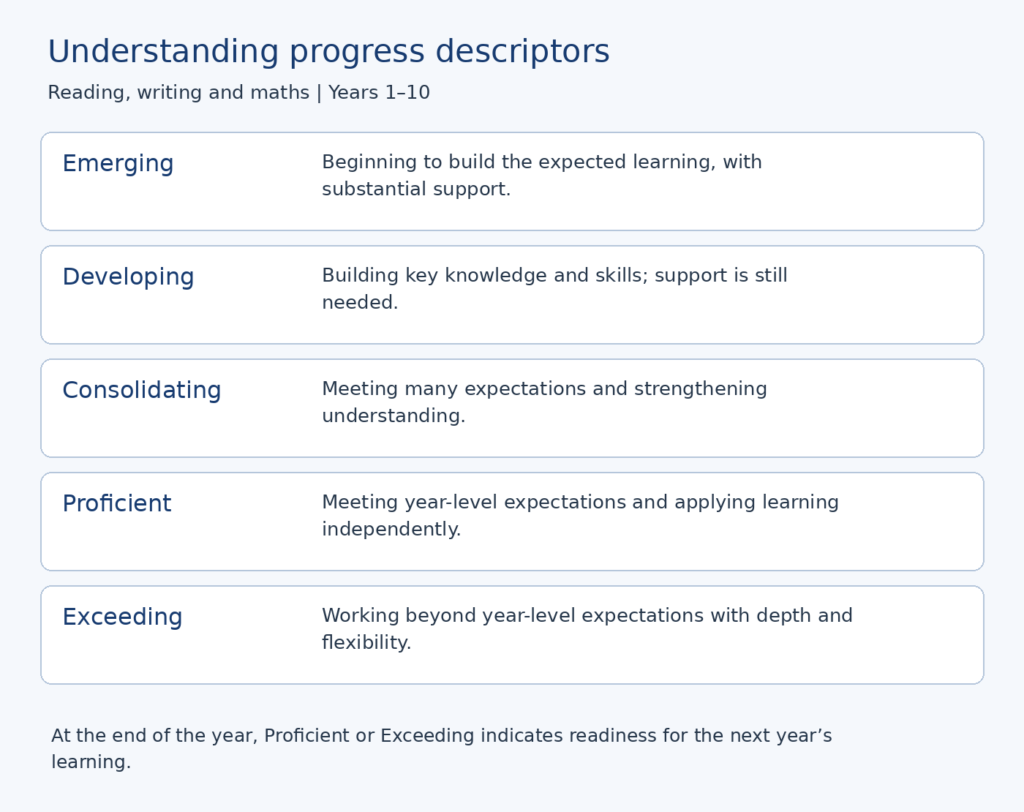
The teacher’s comment helps explain the achievement information. Look for what your child can do, what they are still learning and their next step.
For example, a writing comment might explain that a child can organise a story clearly, while their next step is to develop paragraphs and revise their work. A Consolidating descriptor tells you that they meet many expectations and are strengthening their learning.
Check the date or term beside each result. An end-of-year report may include assessment information from an earlier term. If a comment or result seems unclear, please ask the teacher to explain it.
How do teachers decide?
Teachers draw on classroom work, conversations, observations and assessments to build a picture of learning over time. An overall judgement brings this evidence together; a single test result gives only part of the picture.
What about secondary assessment grades?
Secondary reports may show Achieved, Merit or Excellence for individual tasks. Read these alongside the task title and teacher’s comment. A task grade describes performance in that assessment; a progress descriptor describes learning in relation to year-level curriculum expectations. There is no direct conversion between them.
A Year 9 or 10 task grade does not, by itself, mean NCEA credits have been earned. For senior students, ask the subject teacher how reported results relate to NCEA standards, credits and qualification progress.
Attendance and learning
Regular attendance supports learning, friendships and participation in school life. The sample HKS reports show attendance as a percentage of the reporting period. Please contact us if you have questions about the record or if your child is experiencing barriers to attending. We want to work with you to support them.
Supporting your child at home
Start by celebrating something your child is proud of. Then choose one manageable next step together. You could read and discuss a book, practise number facts, or encourage your child to explain their thinking.
Helpful questions include:
- What are you most pleased with in your learning?
- What feels easier now than it did before?
- What would you like help with next?
If your child has an individual learning plan, discuss progress towards their personal goals as well as curriculum expectations. Their strengths, needs and progress all deserve recognition.
Questions about the report?
Please contact your child’s class or subject teacher to discuss their learning. Your homeroom teacher can help with wider questions or direct you to the right person. You do not need to wait for the next report to raise a concern.
Our shared aim is to help every child grow in knowledge, confidence and character through a caring partnership between home and school.
Further information
Visit the Ministry of Education’s guide to your child’s reporting and progress for explanations and a short video.